Thirty Years In: Patriotism, Privilege and the Responsibility of Critique

Thirty-three years ago, as a naïve yet optimistic 23-year-old, I landed in the USA with a plan for one American year. I harangued my longtime boyfriend, Tom, into coming with me, arguing against a bad economy, worse weather, and a political system in Ireland that intertwined too much with the church for my liking. A year in Florida would be a salve.

Because of generations of Irish family who had immigrated before me, I had a direct path to a green card, but Tom had to go through a longer process. It was five months after I landed that he eventually joined me, visa in hand. Much to both of our surprise, Tom took to the US immediately and wholeheartedly—so much so that once the year was up, he took his turn as the haranguer and convinced me to stay put.

We literally had nothing other than our suitcases and a few hundred dollars to our names when we arrived. We did have a place to stay, which was initially a blessing (a story for another time), but we were intent on striking out fully independently in this new life of ours. We took hourly jobs, put ourselves through trainings, courses, and degrees, bought a house, started careers in the public sector, had three children, and grew up.

America hasn’t always been easy, but we understood that if we worked hard here, we would get ahead—and it’s worth noting that this has been the ethos of every single immigrant I have ever met. And get ahead we did. Not private-jet-and-mansion ahead, but nice bungalow, decent cars, and a few holidays a year ahead. That was enough. We built our lives and careers here, grew our family here, and developed decades-long friendships that still sustain us. We love the American lives we have built—so much so that we fully committed and are now both citizens.

Part of my new American life involved becoming politically aware. I hadn’t paid much attention to politics in Ireland in my youth, but in young adulthood here, I tuned in. No one in my family had ever professed strong political leanings, so in my new country I truly constructed my political belief system from scratch. I discovered that I aligned mostly with a liberal viewpoint, largely because of my strong belief in civil and human rights. Perhaps also because of my suspicion of the Evangelical church and its obvious sway over conservative politics; one of the reasons I wanted a break from Ireland in the first place was because of that same lack of separation I had encountered there. I registered as a Democrat and fully enjoyed—and felt responsible for—my civic participation.

Our immigrant experience, though not without challenge and hard work, has undoubtedly benefited from the fact that we are both white and English-speaking. These are not privileges we asked for, but they are privileges we have benefited from. America was culturally familiar to us, and we were familiar to it. Being white, of course, hasn’t always conferred privilege on Irish immigrants. Between 1840 and the early 1900s, Irish immigrants were widely viewed by white Americans as morally suspect and racially “other.” They experienced institutionalized discrimination in housing and employment, with “No Irish Need Apply” signs abounding. Over time, and with great effort, the Irish came to be viewed as “properly white,” and that changed everything.

I have a realistic relationship with the United States of America. As grateful as I am for my American life, I have worked hard for it. America is not without flaws—no place is—and I have participated in American life long and fully enough that I feel I am a reliable reporter on it. I am not shy about calling out what I think is wrong; in fact, I feel a civic duty to do so.

Immigrants, as a whole, are tough. There isn’t a one of us who hasn’t sacrificed a great deal and relied heavily on faith of one sort or another to be where we are. Not much gets to me, but there is one usually angrily delivered question that does: “If you don’t like it here, why don’t you leave?” That question is kryptonite to this immigrant’s soul. Twice now it has been said to us, both times by white, Republican, US-born “friends,” in response to political critique. Tough as we are, it always cuts. We are American, but not American enough to criticize—is that it? Is my belonging conditional on my consensus?

In the America we were supposed to be—the America we once purported to the world to be—criticism of America was not only acceptable, it was patriotic duty. Silence does not equal patriotism. And how reductive is that question? It entirely negates decades of hard work building the life we now lead.

Things have changed dramatically since we first came to America. Politics here have become increasingly intertwined with religion—often its least Christ-like manifestations. Immigrants are under attack in America—the country of the Statue of Liberty and its declaration: “Give me your tired, your poor, your huddled masses, yearning to breathe free.” Friends and neighbors, here legally, are locked in their houses, afraid to leave in case they are scooped up and sent back to countries they haven’t seen, often in decades, leaving behind lives they have spent years building.

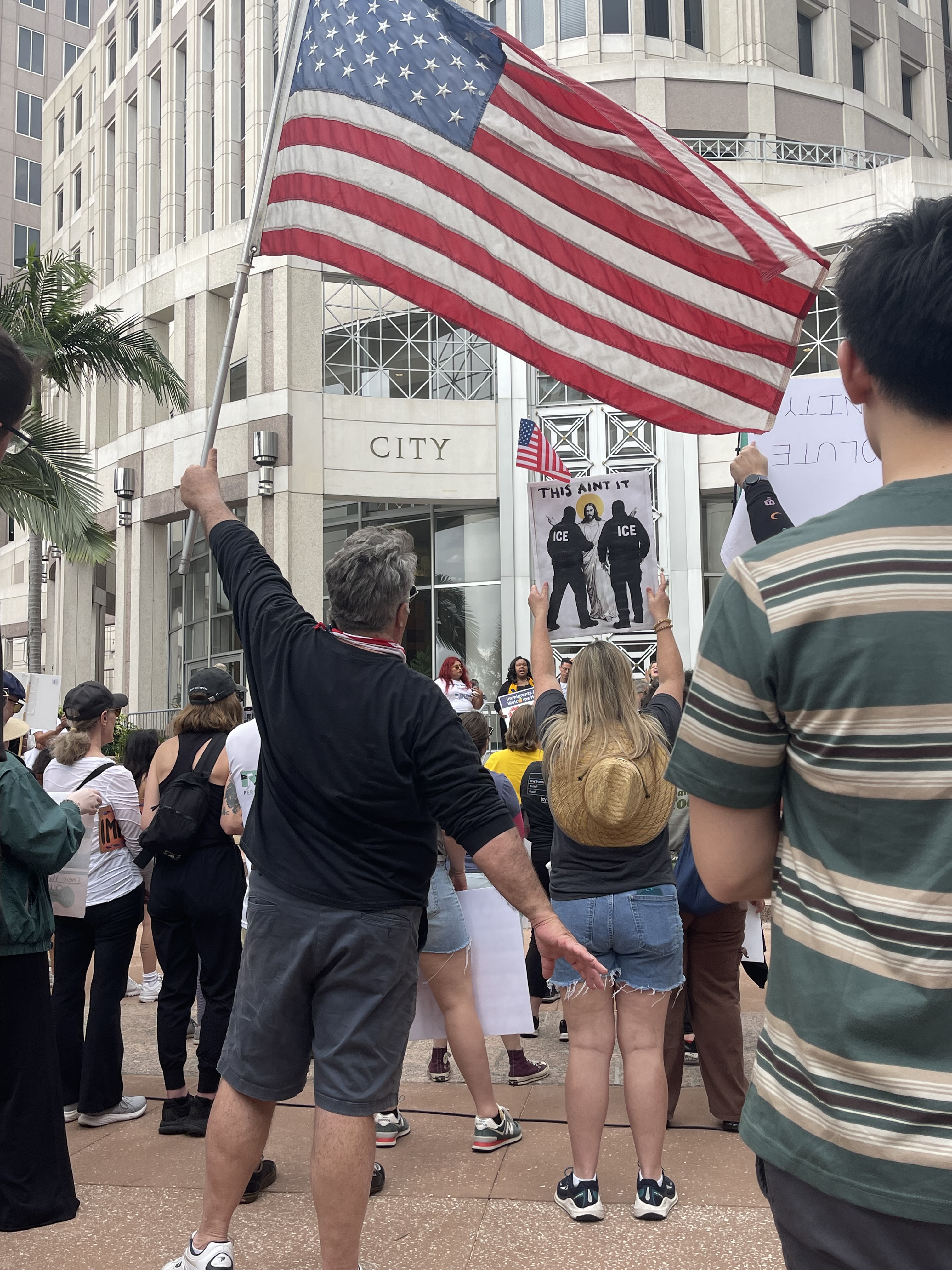
And those who speak up for immigrants are under attack too. As I write this, I am seeing video of yet another fatal ICE-related incident, again in Minnesota. We are at a turning point. While the category of those targeted is now widening to include white people—at least those who dare to object to the desecration of constitutional norms—those of us who know what it is to be immigrants, and who still retain some measure of white privilege, need to stand up.

Yes, it is frightening. That privilege will continue to thin in the face of an administration determined to crush resistance. But this is the reality immigrants of color have always faced. We must view our privilege as a tool and use it as leverage. To be clear, our job is not to lead anyone else’s liberation—we must amplify voices, not replace them—but we can and must remove some of the pressure from those already being crushed. We must be willing to take risks that others simply cannot right now. I recently saw a reel from a history professor who reminded us that there is a thin line between bystander and upstander, and that if enough people cross it, authoritarian movements cannot succeed. Being an upstander simply means, speaking up, acting up, and letting it be know that you know this is not ok.

So now, my fellow immigrants and Americans, let’s remember that this is about all of us, not just some of us. We have worked too hard, and committed too deeply, to confuse silence with loyalty. Loving America has never meant agreeing with it at all times; it has meant believing it is capable of better and refusing to look away when it falls short. We speak up not because we reject this country, but because we are invested in its best possible iteration. We stay, we engage, and we lovingly and firmly insist that America live up to the ideals it so proudly proclaims.
Waiting for Irma – from The Irish Times

I’ll just park this right here:

I’ve lived through 30 hurricanes in Florida since moving from Cork

Floridians are usually skeptical about big storms. Irma is different, writes Cathy Tobin

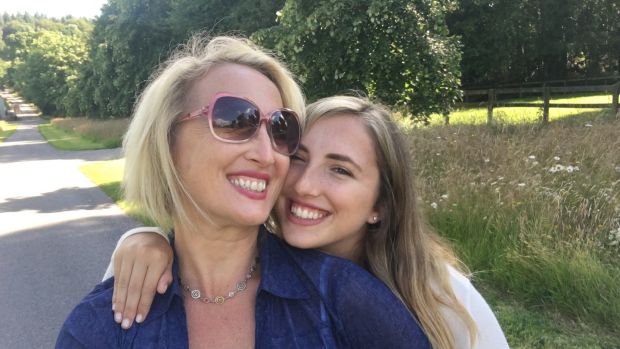
Cathy Tobin with daughter Ciara in Orlando, Florida: ‘We have joined our fellow Floridians in the stealthy preparations for Hurricane Irma.’

It has been 24 years since my husband, Tom, and I first moved to Florida from Cork. There has been much to get used to in that time; mosquitos, alligators, American football . . . the sun. but hurricanes are probably my least favorite Floridian feature. Since we arrived, the state has been impacted by more than 30 hurricanes, and countless more tropical storms.

Our most recent dalliance was with Hurricane Matthew last year. In the run-up to Matthew, a national newscaster announced to the people of Florida that if we didn’t evacuate, we’d all die and, for extra dramatic effect, so would all our kids. We lived to tell the tale.

In the wake of Matthew, the running joke on Floridians’ Facebook walls was pictures of overturned lawn furniture captioned with, “Hurricane Matthew 2016 – We Will Rebuild!” We were grateful to be spared but honestly, in a horribly ungrateful way, we also found the whole thing a bit anti-climactic. Huge hurricane hype and little actual damage results in a population that regards incoming hurricanes with a strong degree of skepticism.

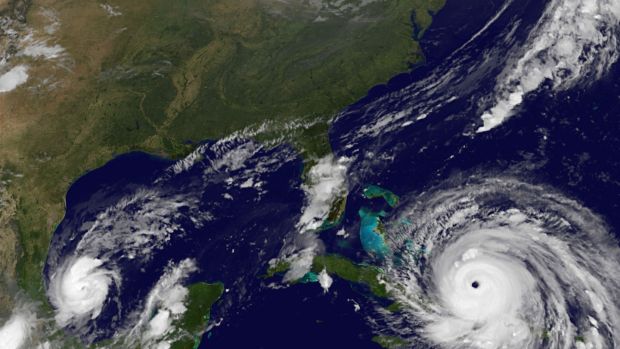
The state of Florida is in the track of where Hurricane Irma may make landfall. Photograph: Getty Images)

That’s not to say that we haven’t seen some decent storms in our time here. Charlie, Frances and Jeanne hit us, in trifecta, in 2004, and took out our new minivan, and our electricity. Ten days with three small children and no air-con in August in Florida is not something we’re ever likely to forget. Our street was blockaded by fallen trees, and it took a month for the heaps of debris piled along our little cul-de-sac to be carted away by local government.

Floridians’ usual hurricane skepticism has, no doubt, been affected by Hurricane Harvey, which recently caused such horrible destruction in Texas. Even before Irma was identified as the strongest Atlantic Basin hurricane in recorded history, I have noticed a difference in how my friends and neighbours were viewing its approach.

Irma is as big as the entire state of Texas, and the usual Floridian jaded hurricane bravado has been replaced by stoicism and stealthy preparation. Though the storm isn’t due to hit us in Central Florida until Sunday, northbound traffic is already nightmarish, there are huge lines at petrol stations, grocery stores have been stripped of supplies like bread, water, and canned goods for days now, and generators are nowhere to be found.

Empty bread shelves at a Walmart in Port St. Lucie in Florida on Thursday. Photograph: Jason Henry/The New York Times

Though Orlando is considered one of the safer cities in Florida to weather a hurricane in, a lot of people are getting out of town and heading north. My father, visiting from Cork, flew home four days early, happy to have landed the last available seat on the Aer Lingus flight out of Orlando on Thursday night.


Tom and I are impacted in our jobs. Tom is a lieutenant at a local fire department and he is sure to have some long days ahead of him. As a member of the administration team at a local public Montessori school, I have been communicating furiously with parents and staff about our district’s vacillating closure decisions. We were due to be open on Friday, but Irma’s sudden jog to the west spurred our governor, late Thursday night, to mandate closures on Friday and Monday.


While doing classroom walkthroughs on Thursday, a little kindergartner, noticing my happy countenance, quietly grabbed my hand, and as though telling me the worst news ever, said, “You do know about the hurricane, right?”


I do know about the hurricane. Hurricanes are a strange phenomenon; a potentially deadly threat that you get to see coming at you, slowly. It does seem, at this point, foolish to try to imagine a scenario where we won’t be impacted by it. The question is how badly.


https://www.irishtimes.com/life-and-style/abroad/i-ve-lived-through-30-hurricanes-in-florida-since-moving-from-cork-1.3214060?mode=amp

Waiting (and waiting, and waiting) for the Hurricane

file-1 (2)

Growing up in Ireland, my only exposure to hurricanes was Chris De Burgh’s song, Waiting for the Hurricane, which, actually, made the whole thing sound rather glamorous. Now that I’ve been living in Florida for 23 years, I can attest that the reality is anything but. Here’s what waiting for a hurricane is – it’s boring.

You heard right. It’s boring. If you’ve never experienced it, it’s hard to imagine. Unlike most catastrophes, which tend to be unexpected, or sudden, hurricanes announce their intention to visit well in advance of their arrival. Irma has left one of the longest calling cards in history. We’ve been watching her track towards us for more than a week, with vacillating dread and optimism. When it was confirmed, a few days ago, that we would likely feel an impact our lives went into hurricane preparation mode.

Being in hurricane preparation mode is something that is difficult to explain. It’s like having a massive heart attack written in your calendar for a weeks’ time, and everyone in a couple hundred miles radius of you is getting one too. And there’s absolutely no way of knowing if it’s really going to happen at all, nor if it does, how bad it’s going to be. Like, we all know death is coming for us eventually, but when a hurricane is tracking towards you it’s like Death is your Uber driver, winding ever closer to your house.

Now think about how that influences your interactions with the people in your daily life. After shutting up our school in advance of the hurricane, my co-workers hugged and said things like, “See you on the other side”! In Cork, where I’m from, it’s not unusual to end an interaction with a nod of the head and a generalized salutation of, “Good luck”. The same salutation is said in Florida when you’re in hurricane preparation mode, but with a bit more of depth of meaning. “Good luck – I hope your house doesn’t get blown away and that all the people in it don’t go flying off too”. “Good luck – I hope we see each other alive again at some time in the future”. “Good luck – may the odds be ever in your favor”. It’s surreal. I’ve taken to saying, “Have a lovely hurricane”, or the slightly less fluid, “May you be minimally impacted”.

There is a list of prescribed things to do when a hurricane is coming your way. You must fill up your gas tank, buy bottled water, canned food, bread, batteries, flashlights and, if you’re flush, a generator. Ironically, medical examiners confirm that, generators tend to kill more people than hurricanes – still, you’re in good shape if you have one. Depending on where you are, or your general level of attention to detail, you may need to board up windows or get sandbags. Everything I’ve just mentioned will become incredibly difficult to buy in the days before the hurricane hits. You’ll spend hours in line for petrol and sandbags, and feel like you’ve won the lottery if you happen to find yourself in a shop that has just had a delivery of bread or water. Bread and water – not normally symbols of good fortune are now the most coveted of commodities. You’ll measure your wealth in them. “Oh, we’ve got eight cases of water; we’ll be fine”, as though the hurricanes will sense the presence of the bottled water stock pile in your house and, acknowledging your superior preparation skills, pass over you.

Hurricane consumerism is a thing. People are financially impacted by a hurricane long before the first leaf flitters down from a tree in their garden. Even after we’ve checked all the boxes on the Must Haves list, we are compelled to wander around shops in the off chance that there’s something we forgot to get. I must have tuna. Canned soup calls to me. E batteries – I don’t even know what they’re for, but I need them. I think my very existence may depend on having baby wipes. I know I forgot something!

There’s also a rule that you must eat all the perishable foods in your house before the storm arrives. There will be no electricity and no garbage collection and you simply don’t want to deal with piles of rotting food in your house. It takes a lot of dedication to get this done, but it must be done.

Generally, we’ll have all the tuna and baby wipes in a full day or two before the storm actually impacts us. The patio furniture will have been secured and we’ll be as ready as we can be. And then what? We sit around watching the news telling us it’s likely we’re all about to die, and we start to get antsy. That’s when pre-hurricane snacking will start. Hurricane snacks are meant to distract us while tornadoes are whirling outside our windows. However, despite being stuffed from all the eggs and cheese we’ve had to eat while doing our due diligence, the waiting and waiting for the hurricane to come leads to snacks being devoured long before the first drop of rain falls.

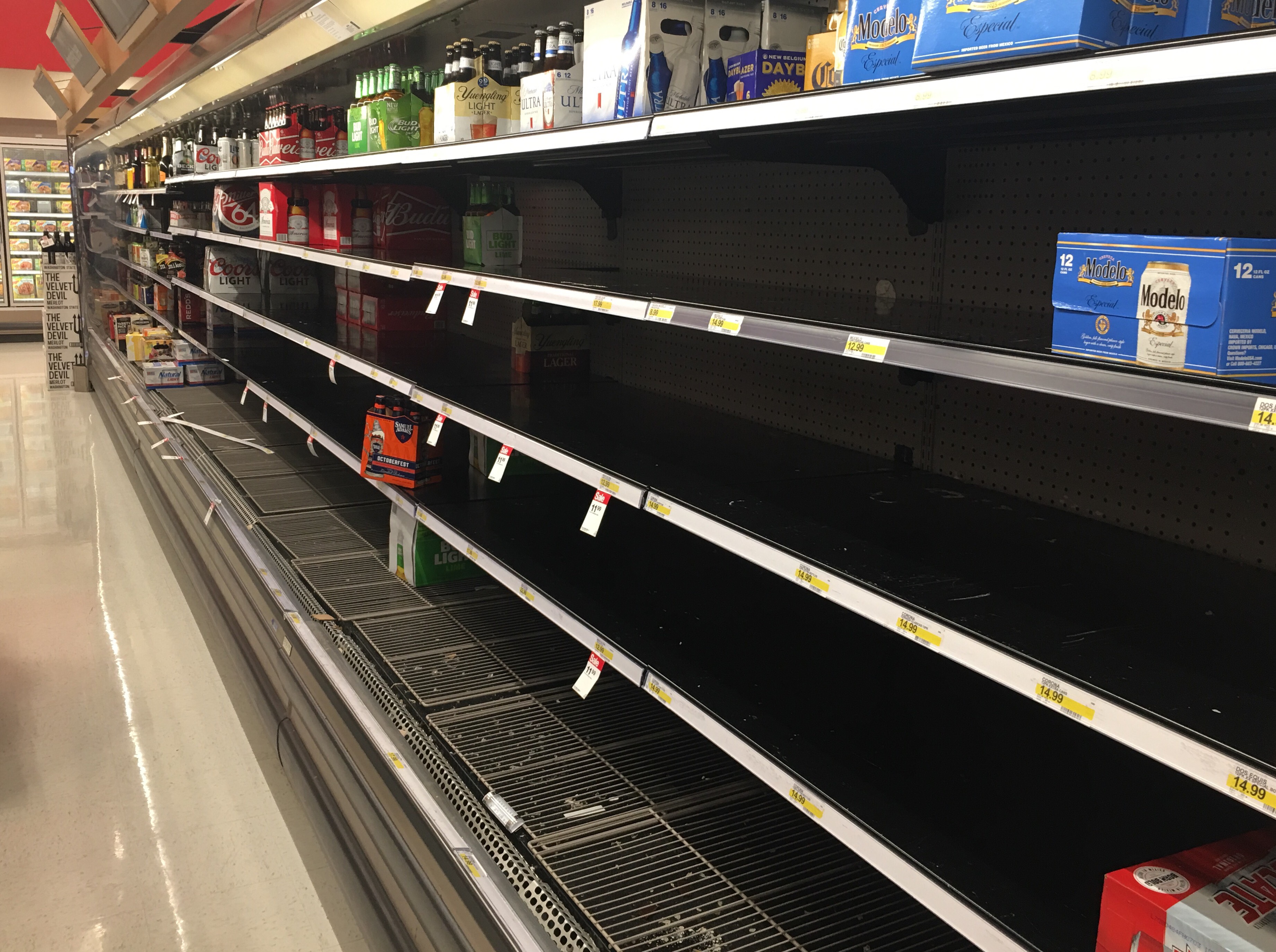
Beer. They won’t show you that on CNN, but as well as the bread, water and canned goods aisles, the beer aisle will be decimated. I can personally attest to that, partially because a good one eighth of our grocery store’s stock is now stacked on our kitchen floor. Hurricanes are conducive to drinking. So much so, that a standard warning broadcast in Florida when a storm is approaching is not to get too drunk until after the storm. Like, we know you’ll be drunk, but try to hold it together a bit until the worst of the threat of death and destruction has passed.

To summarize, the storm is still a day away and I’m broke and I’m fat. To that injury, add this insult – the pubs will all be closed for the next two days. Last night, shopping and exterior prep all done, I went out with friends to Hurricane prep my liver a little. That’s when we found out that all our favorite local spots will be closed until Tuesday. This is devastating news, especially when it’s not unusual, in the hurricane preparation period, to feel the strong urge to sit in a pub with your friends to discuss how unconcerned you are about the hurricane.

Unconcerned, watching and waiting, but NOT hunkering down. Even though this is something that we are required to do in hurricanes, I think it involves some form of squatting, and I’m definitely not doing that. I am also not going to batten down any hatches.

Nope, none of this is glamorous at all, but Chris De Burgh was right about one thing; “[t]here ain’t no place to hide, waiting for the hurricane”. For now, so, I’ll just sit here, on my kitchen floor, with my beer and my canned soup (darn it – no can opener!), and hope for the best. See you on the other side.

The Light in the Closet

Aoife superman

I wrote this in 2015. Even though I knew I wouldn’t share it just then, I wanted to get the words down while they were fresh. Now that all the processing has been long since done, and I finally remembered that I had written them down in the first place, here they are:

Our 14-year-old daughter came out to us last night. Tom and I came home from date night to the familiar sight of our two teenage daughters stretched out on the couch watching TV. Not moving from her horizontal position, nor really even bothering to make eye contact with us, 16-year-old Ciara announced, “Aoife’s got something to tell you”. Aoife continued to watch TV too. “Yup. It’s no big deal – I’m gay,” she said. Or something along those lines. My husband and I exchanged quick startled looks, while otherwise exuding total nonchalance. 

We hope that we have made it clear to our children that they will be loved no matter what, and we’ve also been very public in our support of gay rights. Our kids know that I (a touch judgmentally, perhaps) pigeonhole people based on their attitudes towards gays; if you support the suppression of human rights and civil liberties based on sexual orientation, then you’re no friend of mine. That’s the house we’ve raised them in. But even with that, honestly, we were a bit taken aback.

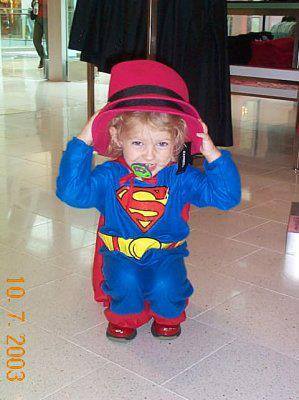
Maybe Aoife’s penchant for wearing a superman costume day and night as a toddler should have been a tip-off?  I had put her attraction to boy clothes down to the fact that she had a new baby brother and felt he was getting too much attention. Also I realized the cross dressing was not necessarily  related to sexuality, and Aoife had been happily dressing as a girl for a long time since then. She had even talked about boys in a way that had would have dispelled any suspicions I might have had. She did play golf, mind. Could that have been a clue? Mostly though the question was how had we, such hip cool parents, managed to be so totally oblivious to this important piece of information about our child?

Back to the announcement; Tom said, “For real?” and upon a nodded confirmation from Aoife, continued, “Good for you. We love you,” and headed off to bed. Bastard. I had questions but I certainly didn’t want to be the less cool parent. I sat on the arm of the couch, all casual like, and asked Aoife some, “Are you sure?”, “How long have you known?”, and “Who’ve you told?” type questions.

It turned that just about her whole high school knew, and had for a while. Our eldest, Ciara, was a bit pissed off to get the news from a friend earlier that day. I was a bit pissed off that I, her gay-hugging mother, was hearing it only after some 3000 teenagers at school had heard it first. I told her that I was happy for her that she was being her authentic self (or some such thing), and that I loved her, and I too shuffled off to bed. Confused.

Next morning, I’m in this strange space of watching my thought process relative to now having a gay daughter, or at least, now knowing I have a gay daughter. I’m worried about what that means for her while also giving thanks that this child is as self-assured and confident as she is. I’m grappling with a new reality. Tom’s gone on shift. Aoife is the first of our three kids to get up that morning, and she suggests that she and I go out for breakfast. I take that to mean she wants to talk things through with her hip, supportive mother. 

On our walk to the restaurant, I offer silence, hoping Aoife will fill it with information that helps me understand the nuances of her announcement. Crickets. We walk in silence – me biting my tongue – and Aoife volunteering nothing. After we get to the restaurant, and have ordered, unable to contain myself any longer, I say “So, let’s talk”. Aoife looks at me with a degree of frustration that makes me realize this breakfast really was only all about breakfast for her.

“I can’t believe you are making such a big deal about this,” she sighs.

What? Me? I’m beyond cool, young lady. I’m supportive, and loving, and a BIG fan of gays, that’s what I am. You have seen my rainbow shirts, right? How is this me making a big deal? (internal dialogue).

Deep breath.

“I don’t think I’m making a big deal, Aoife”.

“Well, compared to my friends you are”, she tells me. “When I told them they basically were all, yeah – whatever, and that was it”.

“No one at all was surprised by it?”, I press. I need validation.

“Nope. I even told my homophobic friends, and they were fine with it too. It’s not a big deal anymore, Mom. You’re the one who thinks it’s a big deal”.

Great. I’m even less cool than the known homophobes.

Our conversation goes on to reveal that she’s always felt this way, and it just seemed like a good time to be open about it. None of her friends were surprised at all. I feel like a bit of an idiot. 

I ask her if she plans on announcing to the family. She says she doesn’t feel compelled to. No one in the family has announced that they’re heterosexual, she says, and she doesn’t feel her sexuality is really anyone’s business but hers. 

My clever girl. It turns out that she, in her fourteen years on this planet, has got the sexuality thing way more figured out than me in my forty plus. She just is who she is, and that’s it. And, it seems that her generation are pretty much on the same page as her. My generation is the only place where a problem exists.

It gives me hope for the future.

So here’s what my first few steps down the path of being the parent of a “freshly announced” gay child have taught me:

  1. If anyone has a problem with my child being gay (and that includes me), it’s their problem, not hers.
  2. Nothing at all has changed. She is exactly the same person she was before I became better informed about her sexuality.
  3. My child’s sexuality, like anyone else’s, is not the entirety of who she is, but a component of who she is, and is, actually, her own business.
  4. Gay or straight, she still won’t empty the dishwasher until the fifth time she’s asked.

It appears that despite my claims of high levels of sensitivity on the subject of gayness in the past, I still have a thing or two to learn. I’m glad that I have such an incredible daughter to help me see the light. And it’s a bright light. The kind that tells me that soon there will be no more closets to come out of.

UPDATE: Aoife is now 16. She was recently elected junior class president; her third year in a row as class president at her high school. She recently was selected as one of two students from her high school to participate in the school district’s Leadership Council, and also won the district’s Slam Poetry competition – all that while maintaining great grades, working a part-time job, and being an all round excellent human. 

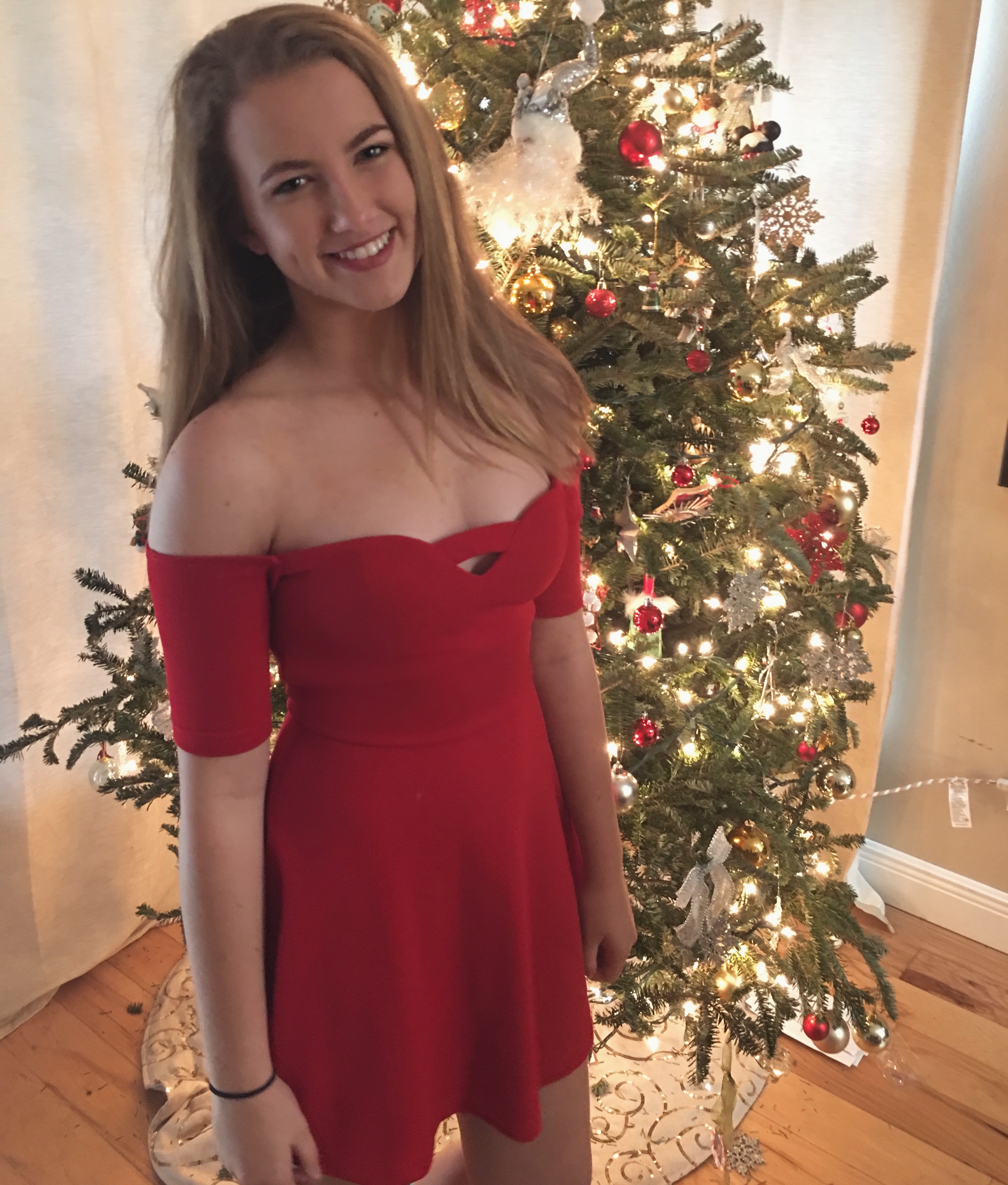
Aoife

Fallout Girl

I meet the New Year with mixed feelings; something has got to give but, man, it has been so glorious eating and drinking the shit out of everything for weeks now. Now to deal with the fallout – it’s back to work tomorrow and I don’t seem to be sufficiently stocked in stretchy professional clothing. My current plan is to rotate the two outfits that do still fit until, incrementally, more of my wardrobe becomes accessible again. I’m hoping my colleagues won’t notice. Maybe I can change things up with earrings – my earrings all still fit.

Next problem is how to make it so I can get back into the rest of my clothes. I have had that conversation with myself about how weight is just a number, and I should focus on the positive aspects of myself – but my charming personality isn’t going to help me fit into my clothes, and I will not, WILL NOT, buy bigger pants! In my career as an educator I have always found that where I set the bar for my students, was exactly where they rose to. Sadly, the same can be said for the clothes in my closet – whatever the largest size is, I will expand to fill it.

In Ireland there’s a decent lag time between the last mince pie and the first beach day. Not so in Florida. We were at the beach on December 27th – horrifying! On top of my fear of bathing suits, clues that the time has come to apply the brakes include my total avoidance of being in photos and, when cornered, the way I terrify random children as I grab them to place in front of me before saying, “cheese” (chin tilted just so). Another big tip off was that when playing around with a photo editing app recently, I was seriously considering being okay with my Facebook friends thinking that my teenage daughter was pregnant – if I pulled her stomach out just so it made my waist look much smaller. Signs!

So here’s my plan for the New Year, and it encompasses more than just dealing with my current roundness: I am committing to thirty minutes of goodness each day. Ten minutes to each area I feel needs attention. I promise myself to exercise for ten minutes each day, to mediate for ten minutes each day, and to write for ten minutes each day. I feel I can force myself to squeeze thirty minutes out of the day for these things. And the hope is that once I have done ten minutes a day for a while, some synapses will have connected in my old brain so that it gets easier to expand the duration of each thing. In the interim I’ll also do that God awful thing of trying to expend more calories than I  consume (hate that).

In the hopes that my derriere soon stops progressing up my back, that is the plan. I have already removed the bad stuff from the house; not as noble as it sounds – I ate it all. Today I did more than my ten minutes of writing (voila!), I mediated for a whole 17 minutes, and shocked the hell out of my poor, neglected elliptical machine for a full 15 minutes. Now let’s see how fabulous I am with a ten hour work day in the mix. But I do feel that the two pairs of pants situation will be a motivator. Otherwise, I’ll be investing heavily in earrings.

Waiting for the Hurricane (Irish Times)

Hurricane season in Florida runs from June 1st to November 30th. Veteran Floridians know that those five months are also silly season for local news and weather shows; the slightest bit of movement off the coast of Africa is likely to lead to pronouncements of impending doom. Usually the cloudy clumps on the weather map disperse or veer off, leaving the TV weather guys crestfallen, and the rest of us chuckling at our own insightfulness in not having been bothered to begin with. Sometimes, however, the pronouncements are accurate.

Hurricane Andrew in 1992 is a prime example of that. Andrew, a category 5 hurricane, hit a year before I moved to Orlando, but my cousin Val ran into it on his honeymoon in South Florida, and described it terms that put hurricanes right at the top of my “things I may not like about living in Florida” list – even beating alligators, mosquitos and snakes.

And of course, I didn’t arrive here a veteran Floridian; my first few years in residence I watched every slight swirl in the Atlantic with the exact degree of attention and trepidation that the weather guys wanted me to. Ten years in and I had noticed a definite pattern of dissipation or redirection, leading me to become almost native grade blasé about the whole hurricane thing. Until Charley, that is.

In August, 2004, it became clear that one particular swirly mass coming headed towards Florida was not going to fade into oblivion. Veteran Floridians tend to play chicken with hurricanes. Even when the weather guys were yelling, “we really mean it this time”, it was only when the storm was a couple of days out that we started to pay attention. In fact, I went straight from blasé to terrified with no stops in between.

There’s something incredibly surreal about an approaching hurricane. We could see the storm tracking towards us on our TV screens and there was nothing we could really do about it other than stock up on water, canned food, batteries, flash lights, ice and such. The grocery store shelves were ransacked. I remember thinking it was odd how bread was such a hot commodity (people seem compelled to make sandwiches in hurricanes). Alcohol, more understandably, is also a hurricane staple, and hurricane parties are actually a thing.

In 2004, my husband Tom and I had expanded our tribe to include a one-year-old, a three-year-old and a five-year-old. We got as prepared as we could. We brought in outside furniture and anything that might become a projectile. We stocked up on the recommended supplies, filled the cars up with petrol, and reckoned the rest was out of our control. Then Tom had to go to work; he’s a firefighter and is wont to be at work during hurricanes and such. That left me, our three children, my mother, and our friend Colin, taking shelter in our little tree shaded bungalow as the winds picked up.

We watched the TV coverage for as long as we could before huddling into a small interior hallway which we had furbished with a single bed mattress, blankets, flashlights, water and food. Listening to the winds whipping outside, punctuated by the occasional crash and bang, was totally unnerving. Tornadoes were a worry so we tried to notice changes in the stormy concerto; anything that might signal that impending doom we had heard about for so long. The storm seemed to last for hours, but when things finally quieted down, Colin announced that he would venture out to assess the damage. We had heard one particularly painful metallic crunch, and that turned out to have been the swansong of my mini-van, which was discovered to have a large tree directly down its middle. Our cul-de-sac looked like a war zone and a huge pine had fallen across it’s exit, essentially imprisoning us.

The aftermath of the storm was even more traumatic than its visit. The damage to the scenery of our daily backdrop was deeply disturbing. Piles of debris stacked in front of houses sat there for weeks as our utilities companies struggled to meet the need. Worst of all was the fact that damage to the lines left us without electricity for a week. No electricity is a challenge under any circumstances, but in August, in Florida, it was unbearable. My three sweaty babies cried often and emphatically. But little by little, not helped by the subsequent visits of hurricanes Frances and Jeanne, the damage was undone and we scratched our way back to normalcy.

Shockingly, I have since grown blasé again about hurricanes. That’s likely a function of time, but also a probability thing – we hear the names of the storms as they form in the Atlantic or in the Tropics but since the majority of them really do fizzle out, we don’t pay attention. Until now, and Matthew.

As I write we are hours away from meeting the massive Matthew. I gave Matthew the same sparse attention I normally do when a name is first announced. Matthew didn’t fizzle out though, and here I am, twelve years post Charley, sitting in the same little house, waiting for a storm which our state governor earlier announced, “. . . will kill you”. My Weather Channel app sent me a notification a few hours ago which said, “Get Out Now”. Yet, I’m trying to remain optimistic.

We have two cases of water, food, batteries, candles, flashlights and petrol. All the patio furniture is stacked and the basketball hoop is reclined. Like last time, Tom’s at work and Colin will be over soon to spend the night. The toddlers are now teenagers (so deodorant is currently a hurricane staple too). The rain is here now and the trees are starting a slow dance. We will watch the wind pick up and our sense of foreboding will increase as daylight dwindles. We will attend to the TV for as long as it’s safe, or until the power goes out, whichever comes first. We will hole up in our safe space and listen to the harsh notes of the storm playing outside. This time we will have smart phones to keep us informed (for as long as the towers stay standing) and laptops to keep us distracted (for as long as the batteries last).

The TV weather guys won’t get to sleep tonight, and chances are we won’t either. There’s a heaviness around the uncertainty of what this night will bring. Either we’ll be digging out tomorrow or we’ll be wondering what to do with all the sandwiches and batteries. We’ll know soon enough.

http://www.irishtimes.com/life-and-style/generation-emigration/irishwoman-in-florida-our-sense-of-foreboding-is-increasing-1.2820589

Bye-bye, Baby

When my first-born, Ciara, was four I enrolled her in a half day program at a local Montessori school. I was a Montessori teacher (taking a year or two out for reproductive purposes) so it made sense that I would want her to reap the Montessori benefits. I prepped Ciara for that first day; we toured the school, bought the snacks, I talked it up, but on the day she was due to start, about ten minutes into the new morning routine, she asked me to sit on the couch with her. “I’m not ready”, she said. “Me neither”, I replied, and that was that. Ciara never made it to preschool.

She was reading, and social and doing just fine without preschool, I told myself, but there was no reasonable way to avoid kindergarten. We toured the school, we bought the backpack, we talked it up, we met the teacher, and on one warm August morning, with her three year old sister on one hand, and her soon to be baby brother kicking around my innards, my husband, Tom, and I walked our little Ciara into Blankner K-8 to begin her educational journey.

She was ready then. I still wasn’t. I held it together in the school, encouraged by her total excitement and absolute confidence. I held it together in the car, not wanting to upset little Aoife. But, when I got to the bathroom at home, I took a look at my sorry self in the mirror and started to bawl. Oh, how I wept. I wept for Ireland. I wept for the “loss” of my child. I wept for the “loss” of Aoife and (unborn baby) Tomas’s time with their big sister. I wept for the books we wouldn’t read together, the Dragon Tales episodes that would go unwatched, the playground trips we’d miss. I wept for the loss of control. I wept the ugly weep, with snot and slime and deep, reverberating sobs. After about thirty minutes, with my husband knocking on the door to check if I might ever come out, I looked at my red, swollen face, hair “glued” haphazardly  across it, and knew I had to get myself together. Life would go on. We would adjust. She’d be back at 2:45 PM, after all.

Jump forward in time 13 years. The way I just said that is kind of the way it was –  a short jump. Ciara, now 18, had finished her elementary and secondary education. She had played a blinder (despite the deprivation of preschool). She was class president all four years of high school. She joined soccer and swim teams, she soared academically, but more than all that she was a very decent and kind human being. Tom and I had one end goal when we decided to have children; to raise people whose company we would enjoy as adults, and we knocked it out of the park with Ciara. But now, having raised a person we really liked, came the cruel irony of college.

In America, college age kids have a tendency to move away, far away, for college. Back in my day you took the bus to UCC (University College Cork) or the Tech, and were back home in time for the dinner. Parents generally had to beg their children to move out at some point in their twenties. Despite a concerted effort on my part to extol the merits of online college (which could be comfortably attended from the kitchen counter) our American girl had indeed set her sights very far away. Indulgently we drove her to visit universities as much  as ten hours away, but heaved deep, deep sighs of relief when she accepted an offer from the University of Florida, a mere one hundred and twelve miles from home.

Once the decision was made I entered a long and lovely period of denial. I was finishing up my Master’s degree, starting a new job and we were planning a big celebratory European trip to mark multiple family milestones; it was easy to put the college thing on the long finger. A few weeks out from move in day and Ciara told me about moms of her friends who were already openly weeping at any mention of the upcoming nest departures. I was cool as a breeze (though I did find myself humming the Beatles, She’s Leaving Home, at odd times).

The weekend before she left, I went dorm room shopping with her and, though I acknowledged on some strange level, that something was about to change, I still managed to remain aloof. On the one hand I was proud of myself for being able to put her excitement above my potential grief, but on the other I thought it was odd that I was feeling so detached. I speculated that maybe my experience as an emigrant helped me put it all in perspective – she wasn’t leaving us to cross an ocean, after all. That was probably it.

I got through packing and the pile of boxes by the front door feeling calm. My sister came by on the morning of moving day to say her goodbyes. She had confessed to being weepy for days at the prospect of Ciara’s departure, and I had her well warned to “behave”. No sooner had she sat with her cup of tea, across the kitchen island from me, than she sighed deeply, “I remember when she was just born”. Tears stung my eyes, and my heart actually hurt. I shook my head, “Oh, no. We are not doing that, Audrey. No, no, no!” But, by the time the “last” hug was given in the driveway, my sister’s sorrows had me beginning to really feel my own. But I kept it together on the drive up there, thankful that Aoife had come with us in place of Tom, who had to work. I did find myself glancing sideways in the car a lot to see the face in the passenger seat, beginning to realize I wouldn’t be seeing it so much anymore.

Arriving at UF we got elbows deep in the move in process; lugging and hefting in 98 degrees. One elevator trip per family was the rule and with an entire van load of boxes and bags, that meant quite a few lumbering, sweaty stair climbs. Once everything was in the dorm room we set about the fun decorating stuff; hanging pictures and mirrors and setting up the extra long twin bed to make it feel like home. Finally came unpacking the clothes. This is when I really began to feel it; we were going to soon be at the part where we left her. As each bag got unpacked my dread grew. I slowed my unpacking pace, tried to remain upbeat, but my voice was cracking, there were deep sighs, and I know she caught my watery eyes a few times. She started to get a little less excited too, realizing soon she’d be on her own. Thankfully, she had a Rush Week orientation to attend at 7 PM, which meant we ran out of time to linger at an emotional goodbye. I drove her to Whatever Hall, hugged her hard and said goodbye. Yes, crying a bit at this point. As we drove away, I watched her in the rear view mirror walking off into her future without me.

The two hour drive home was not as awful as it might have been. Aoife (for once not having to call shotgun) snoozed and I listened to News Radio to stop my thoughts from wandering. I was good, I told myself. She’d be good. It would all be fine. Exhausted I turned onto our street, feeling pretty darn proud of my levels of stoicism throughout the day, but then I saw it – her car. Her car parked outside our house. Our house that no longer had her in it. That was it; the floodgates opened and I was transported back to that first day of kindergarten – a big snotty, sobby mess, and this time she was not going to be home at 2:45 PM.

The sobbing lasted for about two hours on and off that night, and there has been intermittent sobbing since. Don’t tell me how great it’s going to be – I know. No need to remind me that she has entered the best days of her life – I get it. No one is more delighted for her or proud of her than me. And her leaving – we did that – we explicitly raised her to leave; it was all part of the plan. But just for now I’m indulging my sadness about losing the company of one of the people I love the very most from my daily life. I’m lamenting not knowing how she’s feeling throughout each day, what’s she’s eaten, what she’s done, where she’s going. I’m missing the sound of her laugh from the bedroom, her random hugs, her funny stories. And I know that life will go on. I  know that I will adjust. But I also know that it won’t be anytime soon.

Pulse (for the Irish Times)

On Saturday I woke to the horrible news that a young singer had been senselessly shot while signing autographs at a venue just 5 miles (8km) from our house. I shook my head and lamented the loss of this young life, and the fact that Orlando would now be synonymous with the violent act of one crazed man.

On Sunday I woke up to the sounds of helicopters hovering in the airspace over my house. Scrolling through my newsfeed minutes later I learned, with horror, about the shooting at Pulse Nightclub, less than a mile from our front door.

I pass Pulse every day on my drive to work. In its past incarnation as Dante’s Restaurant, my husband and I and a group of friends used to enjoy Thursday happy hours there every week. Since it became Pulse we’ve visited a few times, even held my sister Audrey’s hen night there a few years back.

Now, the early morning news said, 20 people were lying dead inside those walls. I tried to wrap my mind around that, and couldn’t.

I stepped out front and saw our neighbour Fred across the street, partially obscured by the large rainbow flag that flies in his yard. I put my hands up to the sky – what gives? Fred walked towards me with tears in his eyes. We hugged and he told me that he was frantically trying to get hold of his brother, who is often at Pulse on a Saturday night. He told me he was leaving for church. I told him I felt I needed to go too.

I hastily dressed and 10 minutes later was sitting in a pew at Christchurch Unity, a non-denominational church with about a 50 per cent gay congregation. People were hugging each other, sitting looking stunned, crying. Fred told me he’d been in touch with his brother and he was safe. I listened to the uplifting message of tolerance and love and, feeling somewhat better, headed home.

My husband was home from his shift at Winter Park Fire Department by then. He had been unaware of events at Pulse. His crew did run calls for Orange County overnight, but hadn’t known why. He told me the number of dead had been raised to 50 and that this shooting, a stone’s throw from our house, was now being labelled the worst mass shooting in American history. None of us could comprehend the magnitude of that. Columbine, Sandy Hook, Orlando. How is that possible? Down the road. Madness.

Our 18-year-old, Ciara, suggested we go donate blood. My sister had already dropped her young children off so she could do so too. I called home to Cork to let our parents know we were well.

At 10.30am we arrived at the blood centre to see a long line of people reaching out to the street and wrapping back around again into the parking lot. We found my sister Audrey, standing with our friend Lu Hanbury from Dublin, and began our wait. The crowd, a mix of all the demographics, was sombre. People were crying, hugging and expressing pure disbelief that such hatred and violence had visited us in the City Beautiful.

Volunteers were distributing water, snacks and sunscreen to those of us in line. June in Orlando is brutally hot. As we waited the donations got more elaborate. Local restaurants sent employees laden with burritos, ice creams, pizza and subs. An ex-Orlando Magic player, very concerned with everyone’s hydration levels, handed out water bottles insistently. A bank of portable toilets was delivered.

News crews from all over interviewed the people in line. We saw crews from Norway, China, England and Vietnam. The sombre feeling of the morning lifted as the hours passed by, and a strangely muted festive atmosphere settled in. We felt we were part of something, part of a solution, and we were held up by each other.

The lines were amazing; one reporter speculated as many as 1,000 people were at our site alone. When officials from One Blood came to speak to us, about three hours into the wait, to tell us we were likely to be in line for as many as five more hours, hardly anyone left.

Audrey and I had our donation plans thwarted by a Mad Cow Disease restriction on those of us who lived in Ireland in the late 1980s and early 90s. We waited with Ciara, because she was still free to donate. When she got to the registration point we left her to go grab a drink and digest the happenings of the day.

Shortly after we arrived at Vanbarry’s, a restaurant owned by a friend of ours, we realised we had been carried along on a wave of altruism and unity to that point. Separated from the crowd we were left to consider the reality of the violence. The two helicopters still hovering in sight were a stark reminder.

Loud music played and a large group of drunk people seemed oblivious to the fact that the worst mass shooting in US history had just occurred just 3km away. It seemed bizarre. I felt oddly annoyed that the whole place wasn’t full of people hugging and crying. Audrey and I sipped our beers and barely spoke.

I saw him then. A young man intermittently sobbing and staring into space. Wanting to share some of the solidarity we felt at One Blood, and wanting to feel that connection again ourselves, we went and hugged him. His friends told me he worked at the restaurant and had lost multiple friends at Pulse. I asked how he was even vertical, and they told me he needed to be with his work family – he needed their support.

Other patrons followed suit and shared their condolences and hugs. A few minutes before 6pm, everyone gathered around a TV for a live news report and, though not observed on the news station we were tuned to, one of the bartenders announced there would be a minute’s silence. Our friend fell to the floor and his support dissolved around him. It was heartbreaking.

My husband called from One Blood, where he had gone to Ciara, and I went to join them. It had been almost 11 hours since we first joined the line. Inside were the people who had been around us in that line, sun burnt and exhausted but still managing smiles. Amazingly, the staff inside the centre were still smiling too, even as the TVs on the walls reminded us of the horrific reason we had all come together.

News crews were still interviewing donors; a persistent crew from Vietnam filmed needles going in to veins. A photographer shot multiple frames of bags of blood lying on a cart. I watched my daughter’s blood flow into a bag next to her gurney and thanked God she was one of the people able to help, rather than one of those in need of help.

My daughter’s first time donating blood was on the day that the worst mass shooting in US history occurred less than a mile from our home.

I reread that sentence and still can’t come to grips with it. It was a long and harrowing day.

Here’s the thing I take away from this; evil visited but love lives here. One man brought the hate but thousands replied with love. Psychological scars will remain, and I wonder how long it will take, passing Pulse on the way to work, before I won’t think of this day. But I feel more bonded to my community now than ever before. Orlando Proud.

http://www.irishtimes.com/life-and-style/generation-emigration/irishwoman-in-orlando-the-shooting-took-place-a-mile-from-my-home-1.2682540

The Agony of Saint Patty

It’s time for a little reminder about the correct way to shorten the name of our dear Saint Patrick.

corkwoman's avatarThe Cork Woman

857030_10200529904430630_949148279_o

The Irish have made their way across the Atlantic Ocean to American shores since the 1600s.  Today, over thirty-three million Americans proudly identify themselves as being of Irish descent. In fact, it would be a rarity for a native Irish person to set foot on U.S. soil without encountering at least one American interested in relaying information about their own distant relatives from county something or other. Quite a turn around from the experience of the first few native Irish to make the trip, when being from Ireland wasn’t considered such a boast-worthy condition. The Irish however, not generally known for their sensitivity, persisted in coming and now there are enough Americans with some bit of Irish DNA somewhere in their gene pools to warrant a good annual celebration of all things Irish.

Growing up in Ireland my memories of Saint Patrick’s Day involved having a bunch of shamrock pinned to…

View original post 766 more words

Mother’s Day

Today is Mother’s Day in Ireland. I have been blessed with a wonderful mother – not wonderful in many of the traditional measures of motherhood, but wonderful in ways that I have really only been able to appreciate, or possibly just accept, in my own middle years.

I have spent time for so many Mother’s Days past hovering in the aisles, looking for just the right card to send; the “Best Mum Ever”, “Thanks for Always Being There For Me” genre never seemed to fit. I had to navigate the soppy prose to find one that simply said, “I Love You, Mum”, and indeed there were years when even that seemed disingenuous.

You were a wild thing, Mum. You had dreams you had no right to and the audacity to pursue them, even if that sometimes meant your own children were left in your dust. The circumstances of your own childhood left you ill prepared to mother, and the chemistry of your brain routinely spun your perspective from that of a sewing, baking, dinner party throwing super-woman to that of wild animal clawing at its cage.

You were my hero and my nightmare; the glamorous creature I trembled to call mother, and the person locked in the bedroom for weeks on end. But you are my wonderful mother. If not with responsibility, you have loved with ferocity. You loved as you were best equipped to love. The gaps in that love allowed for the arrival of my other mothers – those beloved women who nutured me when you were unable to. I am grateful for them as I am grateful for you. You are the writer, the artist, the intelligent, creative and humorous soul that I am so connected to.

So, I send you a card that I won’t find on a shelf. It reads, “Mum, it hasn’t always been great; there’s been wild laughter and high adventure, there’s been darkness and scars, but I know that you have loved me, that you continue to love me, in the most profound way that you can. If I had to do it over, even with (or maybe, especially with) the benefit of hindsight, I would still choose you as my mother. I love you. Entirely.”